


Author
Ahmed Barakat
Author

Share

Fact Checked by
CryptoNews Editorial Team
Author

In Bitcoin news today, shareholders of Satsuma Technology voted by more than 90% on Monday to sell the company’s remaining 668 BTC, worth roughly $43.5M at current prices, and to cancel its LSE delisting, overruling four of six board members and formally ending a Bitcoin treasury experiment that lasted less than 12 months.
The decision crystallizes one of the sharper destructions of investor capital in the UK crypto space: against the £163.6M raised in August 2025, shareholders now expect to recover between £26.8M and £30M after wind-down costs, less than 20 pence on the pound.
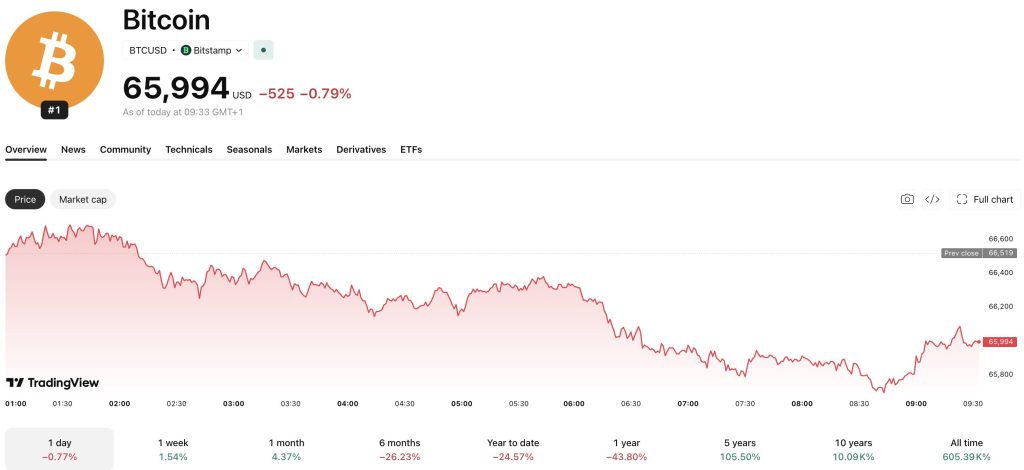
This latest Bitcoin Treasury firm news dropped as BTC climbed a modest +0.4% overnight, dropping under $66,000 since yesterday but still trading at $65,700, with a daily trading volume of $31.8Bn.
Bitcoin News Today: From £163M Raise to Fractional Recovery
Satsuma started life as TAO Alpha, a small AI firm, before rebranding and pivoting to a Bitcoin treasury accumulation strategy. In August 2025, it hired Mark Moss, an American Bitcoin commentator with over 700,000 YouTube subscribers, as Chief Bitcoin Strategist.
The firm then raised £163.6M through convertible notes led by ParaFi Capital, with Pantera Capital, Digital Currency Group, and Kraken participating. Some investors contributed 1,097 BTC directly in place of roughly $97M in cash.
The stock peaked around £14 per share in June 2025. Bitcoin reached its $126,000 all-time high in October before sliding into the current crypto winter, dragging Satsuma’s share price with it.
By December 2025, the company was already liquidating assets to stay solvent, selling 579 BTC for £40M to repay noteholders who declined to convert their debt into equity.
The CFO departed in February 2026; the CEO followed in March. By April, shares had lost more than 99% of their June 2025 peak value, trading at fractions of a penny. At that point, Pantera Capital, holding approximately 6.7% of Satsuma’s stock, began publicly calling for a full liquidation, with a straightforward rationale.
The company’s market cap had fallen well below the value of the Bitcoin on its balance sheet, making the equity position strictly worse than owning the underlying coin. A shareholder group representing more than 20% of issued capital formally put the resolution to a vote.
The board split hard. Four of the six directors opposed liquidation, arguing that Satsuma remained a viable, publicly listed corporate vehicle for Bitcoin. Two sided with shareholders. The 90%-plus vote to wind down left the board majority’s position moot.
Discover: The Best Crypto to Diversify Your Portfolio
The DAT Model Under Scrutiny
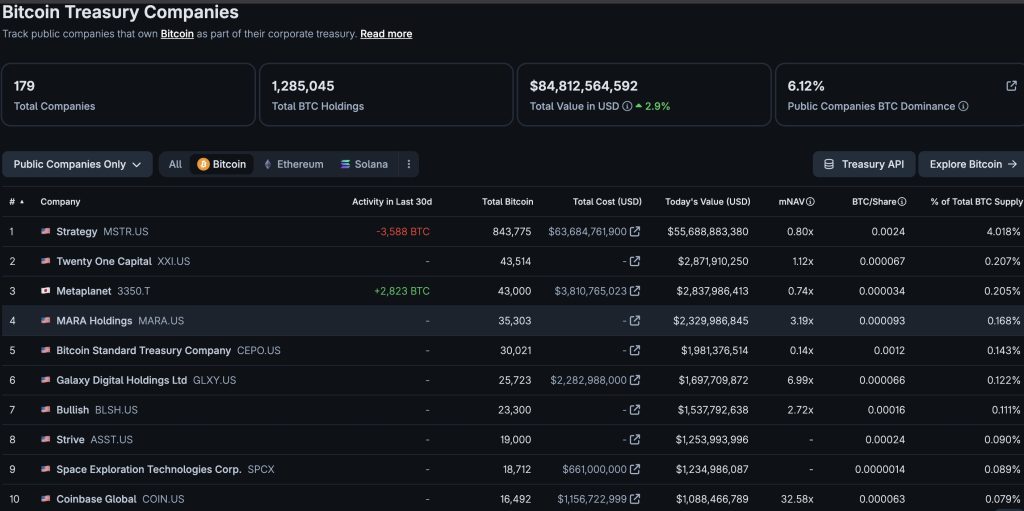
Satsuma’s collapse is the most visible failure yet of the DAT, a digital asset treasury structure that proliferated across UK small-caps in 2025.
These companies, modeled loosely on MicroStrategy’s approach, give equity investors indirect exposure to Bitcoin while bolting on a thin operating business to satisfy UK listing rules on alternative investment fund classification.
The structure works when Bitcoin price momentum and equity premiums reinforce each other; it unravels quickly when both reverse simultaneously, as the convertible note obligations create a sell-to-survive dynamic at exactly the wrong point in the cycle.
The broader regulatory environment for UK crypto companies adds another layer of structural pressure that pure-play listed treasuries are poorly positioned to absorb.
The wind-down proceeds through a “B Share Scheme,” a UK legal mechanism for distributing cash assets back to shareholders. Estimated termination costs run to £2.7M: legal fees, severance, delisting charges, and run-off insurance.
Combined with the £40M recovered from December’s BTC sale, the total capital returned is roughly £66–70M, against the £163.6M raised.
Critically, convertible noteholders rank above common equity in the payout waterfall, so ordinary shareholders may receive considerably less than even those aggregated figures suggest.
Satsuma was the second-largest UK-listed Bitcoin treasury company by holdings at the time of the vote. The Smarter Web Company, holding 2,878 BTC, currently sits at the top of that ranking and has not indicated any plans to wind down, though Satsuma’s outcome will sharpen investor focus on the NAV-to-market-cap gap across all remaining UK crypto treasury vehicles.
The contrast with Michael Saylor’s approach, maintaining Bitcoin conviction through drawdowns rather than liquidating under shareholder pressure, is a live debate in the corporate Bitcoin treasury space right now.
Trade Bitcoin on Bybit and Get a Chance to Win Our $1,000 USDT Airdrop
Bitcoin News: Court Approval and Satsuma Delisting Timeline
UK High Court hearings to approve the capital return scheme are scheduled for August and September 2026. The LSE delisting is expected in mid-September, with shareholder payments due by late September.
High Court hearings to approve the capital return are set for August and September 2026, before distributions begin. For traders still holding Satsuma shares, the key variable is whether the 668 BTC sale executes above or below current spot.
With the Bitcoin price trajectory remaining contested at current levels, even a modest move in either direction will shift the final distribution range away from the £26.8–30M estimate. Noteholders’ priority claim means ordinary equity holders are effectively last in line for whatever remains after costs are settled.
Discover: The Best Token Presales